Across critical sites worldwide, the main power concerns today are cost and availability. At the same time, operators also need power that is reliable and cleaner to operate.
This is a global issue, not a regional one. Across markets, electricity demand is rising, grid infrastructure is tightening, and securing new power capacity is taking longer. For critical sites, that makes power both a cost challenge and an availability risk – with direct consequences for operations, project timing, and business resilience.
Solid Oxide Fuel Cells are a serious option for critical power
For years, on-site power often meant one thing: diesel. It was familiar, available, and easy to explain.
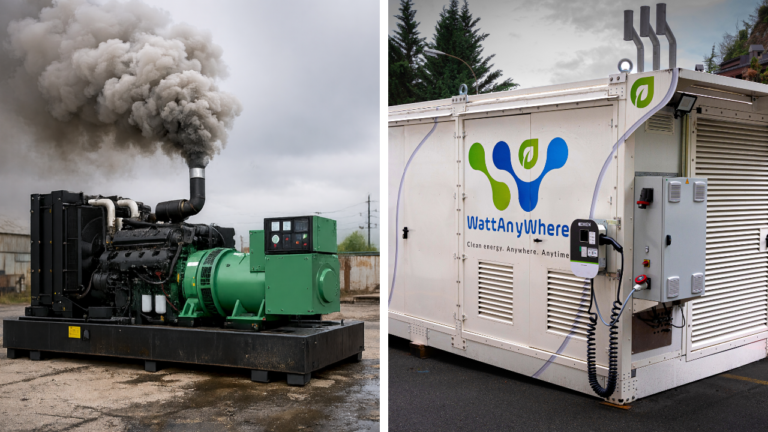
But the market is shifting. Fuel cells are getting more attention because they offer reliable on-site power with pollutant-free, noiseless, and overall a better fit for sites that need more than occasional backup. That is becoming more relevant as operators look for alternatives that can support both resilience and emissions goals.
Solid oxide fuel cells (SOFCs) are high-efficiency electrochemical devices that convert chemical energy from fuels into electricity with low emissions.
SOFC traction in the US shows the market is changing
In the US, SOFC system suppliers in the US have gained major attention through large data-center-related deals, e.g. Equinix above 100 MW and an Oracle partnership built around delivering on-site power to a full data center within 90 days. Those announcements are important because they show that solid oxide fuel cells are now being taken seriously for large, power-hungry digital infrastructure.
Europe is not the US, but the signal still matters. Fuel cells are no longer just a niche technology discussion. They are now a more serious option for sites that cannot afford to wait years for power.
WattAnyWhere’s approach: SOFC technology paired with renewable ethanol
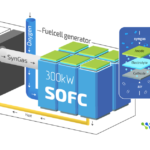
WattAnyWhere is built around solid oxide fuel cell technology. The difference is the fuel option.
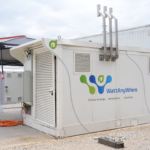
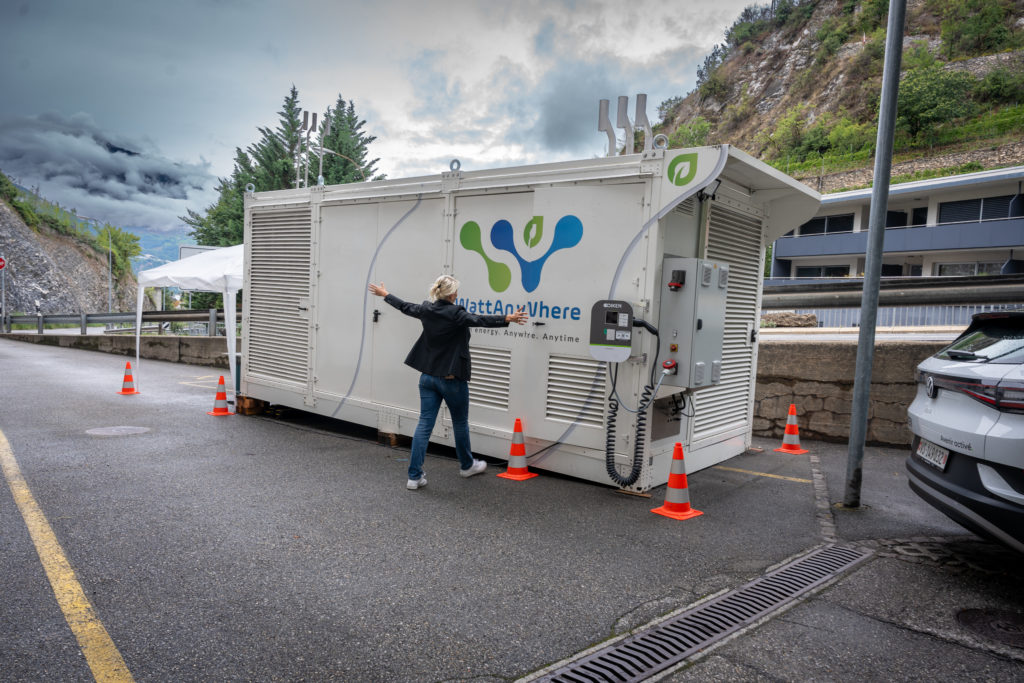
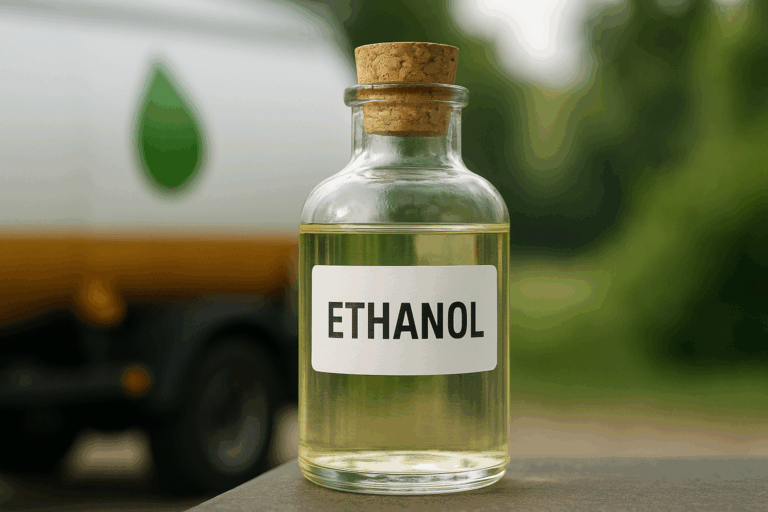
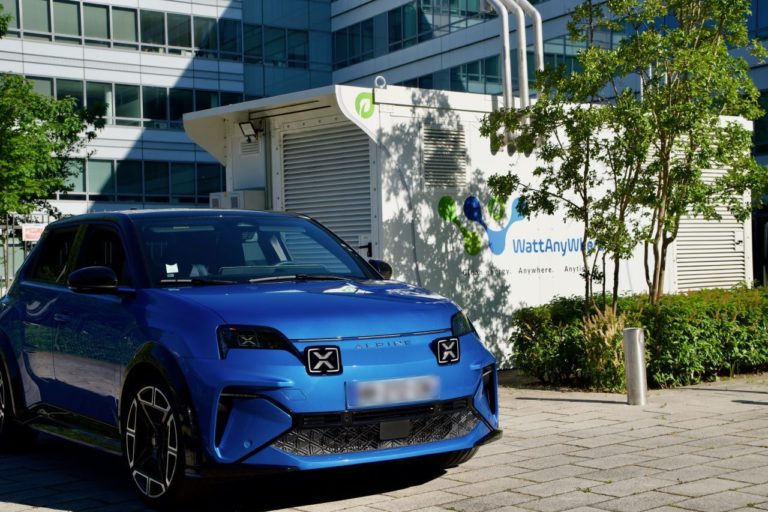
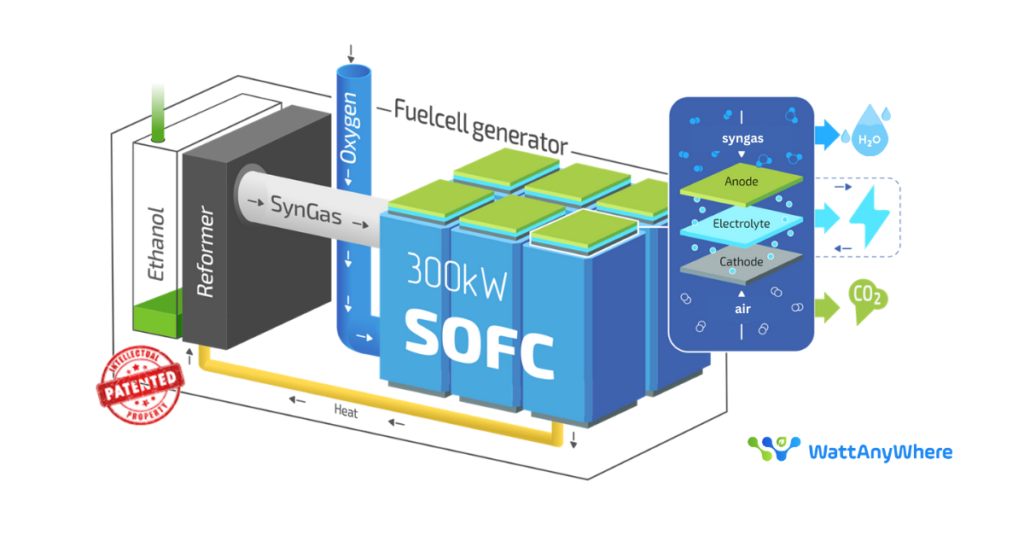
We use renewable ethanol, which is reformed into a hydrogen-rich gas and then converted into electricity through a solid oxide fuel cell from Elcogen. At the end of 2025, we demonstrated the solution in France at the Shell Val Neuvy service station (A10 motorway) by delivering electricity in autonomous operation and validated installation in less than two days. More recently, WattAnyWhere also demonstrated the solution at Dassault Systèmes headquarters, where the genset powered an Alpine EV through an OIKEN charging station in an urban setting – reinforcing the case for clean, decentralized power that can be deployed and used much like a conventional genset.
Why SOFC stands out
The real story is not just fuel cells. It is SOFC + the right fuel option.
Solid oxide fuel cells generate electricity through electrochemistry, not combustion. That supports quieter operation and can reduce the maintenance profile compared with combustion-based generator systems. Peer reviews show net AC electrical efficiency in the 53% to 65% range, which helps explain why SOFCs are gaining attention for high-utilization applications like data centers.
On WattAnyWhere’s side, we’re using Elcogen’s elcoStack®. Elcogen reports above 75% stack electrical efficiency in fuel-cell mode, the most efficient fuel cells in the market. At full system level, WattAnyWhere aims at 60% fuel-to-electricity efficiency. That is a key part of the value proposition: more of the fuel is converted into usable electricity, helping improve both operating efficiency and fuel economics by keeping the kWh cost down.
This is not just about replacing diesel. It is about combining high-efficiency power conversion with a fuel option that is practical to source, store, and manage in real operations.
The fuel question matters too
Power projects are not delayed only by the grid. They can also be exposed to fuel risk.
Critical sites need electricity with a cost base they can understand and plan around. That is becoming harder with diesel and other fossil fuels, especially in periods of geopolitical tension and price volatility. Reuters reported that recent attacks on major oil and gas sites in the Middle East disrupted energy infrastructure and pushed global energy prices sharply higher.
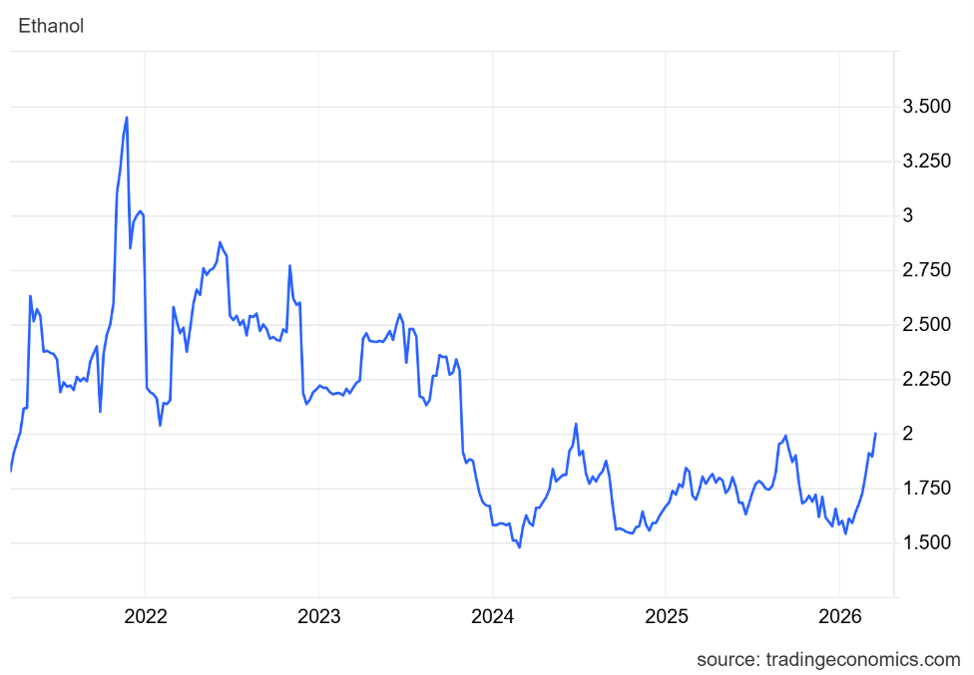
And as the five-year ethanol price chart shows, ethanol prices have moved, but the pattern is still easier to model than the kind of sudden oil-linked spikes that geopolitical shocks can trigger.
Renewable ethanol offers a different route. It is a liquid energy vector that can be stored and delivered using familiar fuel logistics. It is also available at industrial scale. The US and Brazil remain the largest producers, while India has expanded ethanol blending and supply-chain development through its E20 push.
Storage density is part of the story too. WattAnyWhere states that a single 30 m³ ethanol tank can store up to 100 MWh of energy. For constrained sites – especially in Europe, where space is often limited – that can be a major practical advantage compared with battery-only systems, which would require a much larger footprint to store the same amount of energy.
For critical sites, the advantages are practical:
- ethanol is already produced and traded at scale globally,
- it can be modeled more directly in fuel-cost-per-kWh terms,
- it supports compact liquid-fuel storage,
- it fits an operating model based on delivery and refills rather than new pipeline buildout,
- and depending on pathway and feedstock, it can materially reduce lifecycle emissions relative to fossil alternatives.
For WattAnyWhere, that is the strategic point: SOFC efficiency + renewable ethanol logistics.
You do not need to wait for dedicated hydrogen infrastructure. You can work with a renewable liquid fuel pathway that already fits how many industrial users think about autonomy, storage, and refueling.
A broader set of use cases
The same logic applies well beyond data centers.
Many critical sites face the same basic problem: they need reliable power in places where the grid is weak, delayed, unavailable, or simply not sufficient for the load profile. In many of those cases, diesel is still the default.
That is true for construction sites, mines, retail locations, logistics platforms, temporary installations, and large outdoor events such as music festivals. The settings may be different, but the operational challenge is often the same: secure power quickly, run it reliably, manage fuel practically, and reduce the drawbacks that come with conventional generator systems.
That makes the WattAnyWhere model relevant for a wide range of use cases, including:
- sites waiting on grid upgrades,
- edge or modular data centers,
- construction sites with tightening emissions and noise constraints,
- mines and remote industrial sites that want less diesel dependence,
- retail and commercial locations that need extra power for growth and EV charging services,
- logistics and industrial facilities with critical loads,
- urban or semi-urban projects where local air quality and noise matter.
Across all of them, the core need is similar: reliable power, high-efficiency conversion for cost reduction, cleaner local operation, and a fuel pathway that is easier to store, transport, and plan around.
Closing thought
US SOFC system suppliers traction shows that fuel cells have become a more serious part of the critical-power conversation.
WattAnyWhere’s opportunity is to show the next step: not just fuel cells, but solid oxide fuel cells paired with a better fuel option – one that adds flexibility, fuel availability, cost reduction and predictability, and a more practical deployment path for constrained sites.